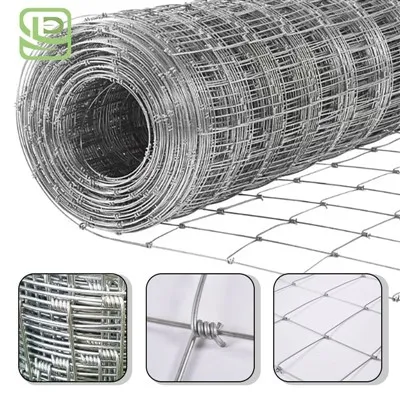
Products Description:
| Product Name | Fence Panel Cattle |
| Surface Treatment | Electiric Galvanized/Hot dipped galvanized |
| Usage | Protecting, Factory, Home Security, fencing mesh |
|
Sample |
Sample are free for customers |
| Place of origin | Hebei, China |
| Material | Iron Wire/Stainless Steels |
| Color |
Silver,etc |
| Length | 10-200m |
| Application | Agricultural, Farm field |
| Height | 0.6m-2.6m |


Advantage Of Cattle Fence

Containment & Control:
Keeps cattle within designated boundaries, preventing wandering onto roads, neighboring properties, or unsafe areas.

Boundary Definition:
Clearly marks property lines and separates different pastures or management zones within the farm.

Predator Deterrence:
Creates a physical barrier against predators like coyotes or dogs, reducing attacks on calves and vulnerable livestock.

Pasture Organization:
Enables rotational grazing, dividing land into paddocks to optimize forage use and promote grass regrowth.

Disease Control:
Helps prevent the spread of diseases by limiting contact between different herds or isolating sick animals.

Selective Separation:
Allows for separating cattle by age, sex, health status, or purpose (e.g., calves, bulls, pregnant cows) for targeted management.

Our Certificate

QUALITY MANAGEMENT SYSTEM CERTIFICATE

ENVIRONMENTAL MANAGEMENT SYSTEM CERTIFICATE

OCCUPATIONAL HEALTH AND SAFETY MANAGEMENTSYSTEM CERTIFICATE
fAQ
1.Q: Which fencing provides the greatest longevity for cattle containment?
A: High-tensile (HT) steel or woven wire fences offer superior durability. These materials withstand animal pressure, extreme weather, and impacts better than alternatives. Proper installation and regular tension upkeep are critical for extended lifespan.
2.Q: What fence height suits cattle best?
A: Standard heights span 4.5–5 ft (1.4–1.5 m). Taller breeds (e.g., bulls) or jumpers may require 5.5–6 ft (1.7–1.8 m). Install the bottom wire close to the ground to prevent calves crawling under.
3.Q: How far apart should fence posts be spaced?
A: Space line posts 8–16 ft (2.5–5 m) apart, adjusting for slope and fence type (closer spacing on uneven ground). Corner/brace posts must handle tension; use H-braces or angled supports anchored deeply.
4.Q: Are electric fences effective for cattle?
A: Yes, when properly deployed. Maintain 2,000–4,000 volts for reliable deterrence. Polywire/tape or electrified HT lines work well in rotational grazing. Ensure proper grounding (≥3 rods in moist soil) and consistent voltage checks.
5.Q: How to prevent cattle pushing against or damaging fences?
A: Add electrified wires at nose level (e.g., one wire 6–12 inches inside the main fence). Use robust materials (steel/timber posts) in high-traffic zones. Provide ample feed/forage away from boundaries to reduce crowding near perimeter lines.
Hot Tags: fence panel cattle, China fence panel cattle manufacturers, suppliers, factory, Cattle Fence Panel, Cattle Yard Fence, Galvanized Cattle Fence, Galvanized Cattle Welded Wire Mesh Panel Fence