


Products Description :
| Product Name | Cattle Fence Roll |
| Surface Treatment | Electiric Galvanized/Hot dipped galvanized |
| Usage | Protecting, Factory, Home Security, fencing mesh |
|
Sample |
Sample are free for customers |
| Place of origin | Hebei, China |
| Material | Iron Wire/Stainless Steels |
| Color |
Silver,etc |
| Length | 10-200m |
| Application | Agricultural, Farm field |
| Height | 0.6m-2.6m |
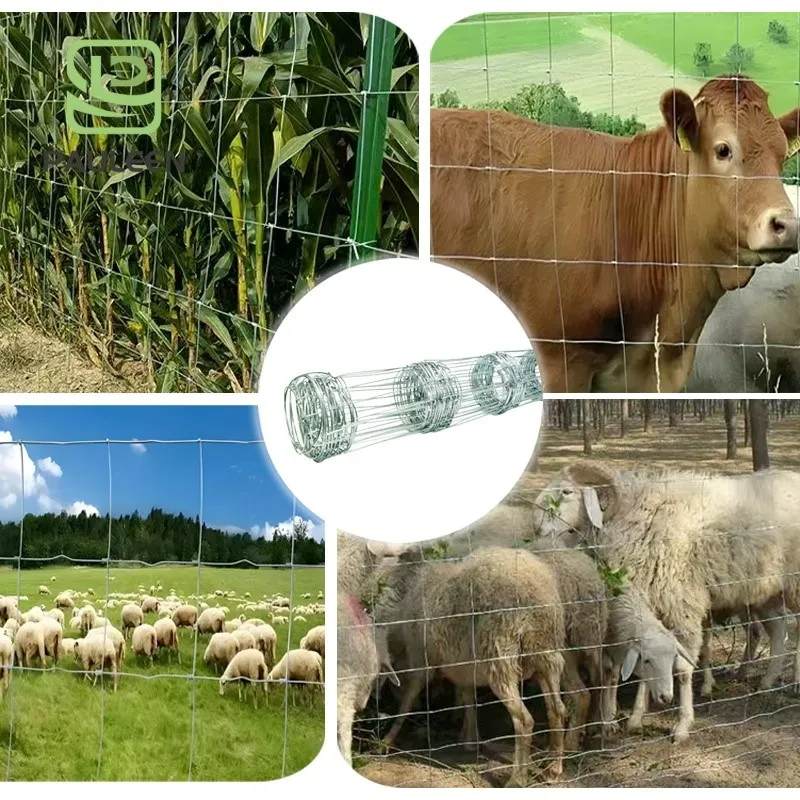
A cattle fence is a specialized barrier designed to contain cattle within a designated area and exclude them from unwanted spaces. Constructed from robust materials like wood posts, high-tensile wire, woven wire mesh ("field fence"), or electric wire/tape, it must withstand the significant pressure and rubbing from large animals. Key variations include permanent boundary fences, portable electric fencing for rotational grazing, and reinforced designs for handling facilities. The primary functions are ensuring livestock safety (preventing access to roads or hazards), protecting crops or sensitive environments, managing grazing patterns efficiently, and clearly defining property boundaries. Effective cattle fencing is fundamental to secure and productive livestock management.

01
Containment & Control
Keeps cattle within designated pastures and prevents wandering, ensuring they stay on your property and away from hazards like roads.
02
Livestock Safety
Protects cattle from injuries caused by escaping, falling into ditches, or encountering dangerous terrain by restricting their movement to safe areas.
03
Pasture Management Efficiency
Enables rotational grazing by dividing land into paddocks, promoting healthier grass regrowth and more efficient forage utilization.
04
Predator/Disease Barrier
Helps deter predators (like coyotes or dogs) and creates a physical barrier to limit direct contact with neighboring livestock, reducing disease transmission risk.
Application of Cattle Fence
Pasture Management
Divides grazing areas for controlled rotation, preventing overgrazing and promoting pasture regrowth and health.
Animal Containment
Keeps cattle safely within designated property boundaries, preventing them from wandering onto roads, neighboring lands, or unsafe areas.
Disease & Pest Control
Creates barriers to restrict contact with potentially infected wildlife or neighboring livestock, reducing disease transmission and external parasite entry.
Predator & Hazard Protection
Deters predators like coyotes or wolves and prevents cattle from accessing dangerous areas such as steep ravines, waterways, or machinery storage.
Breeding & Calf Management
Separates bulls, cows, and calves as needed for controlled breeding, safe calving areas, or weaning purposes.
Property Boundary Demarcation
EClearly defines farm or ranch perimeters for legal purposes, neighbor relations, and general land management organization.


Our company

fAQ
1.Q: Which fencing type offers maximum durability for permanent bovine containment?
A: Combining high-tensile woven wire (commonly called "field fence" or "barbless stock fence") with durable timber or corrosion-resistant steel posts delivers extended service life. This setup provides superior structural integrity for securing mature cattle or bulls long-term.
2.Q: What barrier height and wire pattern are advised for cattle?
A: Perimeter barriers for mature bovines should attain a minimum height of 54 inches (4.5 feet). Key specifications:
Woven wire: Features tighter spacing near the base (4-6 inches) to deter calves, transitioning to progressively wider gaps upwards.
Electric fencing: Typically utilizes 3-5 strands, with the lowest conductor placed 20-30 inches above ground level.
3.Q: Is electrified fencing effective and safe for animal confinement?
A: Correctly implemented electric boundaries provide efficient bovine restraint via a potent yet harmless containment method. Common components include polywire/polytape or high-tensile wire. Reliable operation depends on adequate energizer capacity, proper grounding, and diligent upkeep to preserve circuit continuity and prevent vegetation shorts. This method is particularly advantageous for managed grazing systems or internal pasture subdivision.
4.Q: Suggested upkeep protocol for livestock perimeter barriers?
A: Conduct quarterly and post-adverse weather examinations, assessing:
Compromised wires or loose connectors
Deteriorated posts (rotted wood, bent steel)
Sagging barrier sections
Foliage contact with active conductors
Permanent installations demand less frequent maintenance compared to electric variants, which require weekly vegetation management and energizer monitoring during peak growth phases.
5.Q: Principal expenditure factors in bovine fencing projects?
A: Major cost components include:
Fencing System: Woven wire generally costs more than barbed wire; advanced electric setups may involve higher upfront investment.
Materials: Post type (steel/wood/composite), conductor selection (wire/tape), insulators (for electric systems), gates, bracing.
Project Scope: Total linear footage enclosed.
Site Conditions: Rocky, sloped, or wooded landscapes increase labor intensity and complexity.
Installation Method: Self-installation versus professional contractor fees.
Supplementary Items: Energizers (battery/solar-powered), post-setting concrete, specialized gate hardware.
Hot Tags: cattle fence roll, China cattle fence roll manufacturers, suppliers, factory, Cattle Fence Panel, Cattle Yard Fence, Galvanized Cattle Fence, Galvanized Cattle Welded Wire Mesh Panel Fence


