


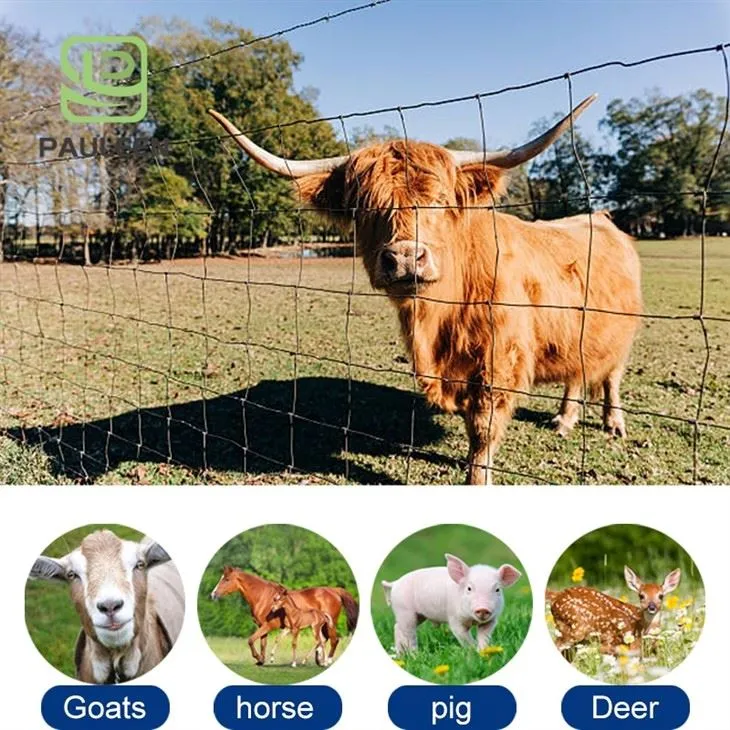


Products Description :
| Product Name | Cattle Fence Gate |
| Surface Treatment | Electiric Galvanized/Hot dipped galvanized |
| Usage | Protecting, Factory, Home Security, fencing mesh |
|
Sample |
Sample are free for customers |
| Place of origin | Hebei, China |
| Material | Iron Wire/Stainless Steels |
| Color |
Silver,etc |
| Length | 10-200m |
| Application | Agricultural, Farm field |
| Height | 0.6m-2.6m |

What Is Cattle Fence?
Cattle Fence, also commonly known as stock fence or ranch fence, is essential infrastructure designed specifically to contain and manage cattle herds. Constructed typically from sturdy materials like woven wire, wood, steel posts, or high-tensile wire, often incorporating barbed wire strands at the top, its primary purpose is to safely restrain large, powerful animals within designated pastures or grazing areas. Key characteristics include significant height (usually 4-5 feet or more), durability to withstand animal pressure and weather, and resistance to leaning or breaking. Effective cattle fencing prevents livestock from straying onto roads or neighboring properties, protects crops or sensitive areas, facilitates rotational grazing management, and enhances overall farm security and animal safety, making it a fundamental tool for cattle ranching and farming operations worldwide.
Application of Cattle Fence

Livestock Containment
Keeps cattle safely within designated farm boundaries and prevents them from wandering onto roads or neighboring properties.
Pasture Management / Rotation
Divides grazing land into smaller sections (paddocks), allowing controlled rotational grazing to promote pasture regrowth and prevent overgrazing.
Predator & Threat Protection
Creates a physical barrier to deter predators (like wolves or coyotes), stray dogs, and other potential threats to the herd's safety.
Crop & Sensitive Area Protection
Shields planted crops, gardens, orchards, riparian zones (waterways), and environmentally sensitive areas from damage caused by cattle trampling or grazing.
Handling & Sorting Facilitation
Forms corridors (alleys) and pens essential for safely guiding, sorting, loading, and providing veterinary care or other management tasks to cattle.
Biosecurity & Disease Control
Restricts unauthorized access by people/vehicles and prevents direct contact with neighboring livestock, reducing the risk of disease transmission into or out of the herd.

advantage of Cattle Fence
PAULEEN
Containment & Control
Keeps cattle within designated safe boundaries. Prevents wandering onto roads, neighboring properties, or hazardous areas.
Enhanced Safety
Protects cattle from external dangers. Reduces risk of accidents (e.g., traffic), predator attacks, and ingestion of toxic plants.
Pasture/Rotation Management
Enables controlled grazing practices. Allows for rotational grazing to improve forage health, prevent overgrazing, and optimize pasture use.
Predator Deterrence
Creates a physical barrier against threats. Deters coyotes, wolves, or dogs, protecting calves and vulnerable animals.
Disease/Biosecurity Control
Limits contact with outside animals. Helps prevent the spread of diseases from wildlife or neighboring livestock and restricts unauthorized access.
Cost-Effective Management
Saves time, labor, and resources. Reduces effort spent herding or searching for stray animals and protects valuable crops/landscapes from trampling or consumption.

fAQ
1.Q: What fencing offers greatest longevity for cattle containment?
A: High-tensile woven wire ("field fence"/"barbless stock fence") combined with durable timber or corrosion-resistant steel posts delivers superior durability, especially for containing large breeds or bulls securely over extended periods.
2.Q: Ideal height and wire configuration for bovine barriers?
A: Mature cattle require barriers standing at least 54 inches (4.5 feet) tall. Layout specifics:
Woven wire: Features tighter bottom spacing (4-6 inches) to prevent calf egress, progressively increasing gap dimensions upward.
Electric variants: Typically utilize 3-5 strands, with the lowest conductor positioned 20-30 inches above ground level.
3.Q: Can electric perimeters effectively and safely contain livestock?
A: Correctly implemented electric systems provide efficient cattle containment through a potent but non-lethal deterrent. Common materials include polywire/tape or high-tensile conductors. Reliable operation depends on adequate energizer capacity, proper grounding, and ongoing maintenance to ensure conductivity and prevent vegetation-induced disruptions. This method is particularly advantageous for rotational grazing or internal pasture subdivisions.
4.Q: Suggested maintenance schedule for livestock fencing?
A: Conduct seasonal evaluations and post-adverse weather assessments, checking for:
Compromised wires or loose connectors
Deteriorated posts (rotted timber, bent steel)
Sagging fence sections
Foliage contacting energized lines
Permanent installations require less frequent upkeep than electric systems, which demand weekly vegetation management and energizer validation during peak growth seasons.
5.Q: Principal cost drivers for cattle fencing installations?
A: Major expenditure factors include:
Barrier Selection: Woven wire typically costs more than barbed wire; advanced electric systems may incur higher upfront investment.
Materials: Post composition (steel/wood/composite), conductor type (wire/tape), insulators (electric systems), gates, bracing.
Scale: Total linear fencing distance.
Terrain Characteristics: Rocky, sloped, or wooded landscapes increase labor intensity and complexity.
Installation Method: DIY versus contractor fees.
Ancillary Components: Energizers (battery/solar), concrete for post-setting, specialized gate hardware.
Hot Tags: cattle fence gate, China cattle fence gate manufacturers, suppliers, factory, Galvanized Cattle Fence, Electric Fence For Cattle, Cattle Fence Gate, Cattle Corral Fence, Galvanized Cattle Welded Wire Mesh Panel Fence, Cattle Fixed Knot Field Fence


