↵
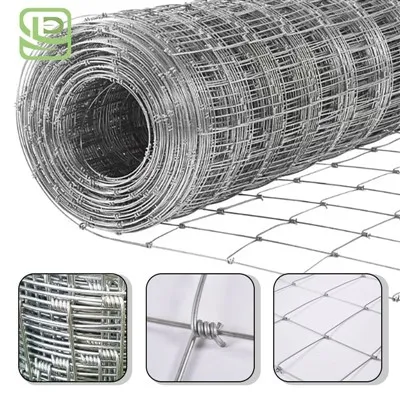
Products Description :
| Product Name | Cattle Fence Panel |
| Surface Treatment | Electiric Galvanized/Hot dipped galvanized |
| Usage | Protecting, Factory, Home Security, fencing mesh |
|
Sample |
Sample are free for customers |
| place of origin | Hebei, China |
| Material | Iron Wire/Stainless Steels |
| Color |
Silver,etc |
| Length | 10-200m |
| Application | Agricultural, Farm field |
| Height | 0.6m-2.6m |

Cattle Fence
A cattle fence is a crucial agricultural barrier specifically designed to contain and manage cattle within designated areas, such as pastures or paddocks, while often excluding unwanted animals. Constructed from durable materials like woven wire, barbed wire, high-tensile smooth wire, wood, or electric fencing systems, its primary function is to safely restrain these large, powerful livestock. Key characteristics include sufficient height to prevent jumping or leaning, strength to withstand pressure, and stability in the posts and anchors. Beyond confinement, cattle fences also serve vital roles in protecting herds from predators, preventing access to roads or sensitive areas, and facilitating effective rotational grazing and pasture management practices essential for sustainable livestock farming.
product applications

Livestock Containment
The primary function – keeps cattle safely within designated grazing areas or pastures and prevents them from straying onto roads, neighboring properties, or hazardous areas.

Predator Deterrence
Creates a physical barrier to discourage predators (like coyotes, wolves, or dogs) from easily entering pastures and attacking vulnerable calves or weaker cattle.

Pasture Rotation
Enables the division of large grazing areas into smaller paddocks, allowing for controlled rotation of cattle herds. This promotes better forage regrowth, prevents overgrazing, and improves pasture health.

Resource Protection
Used to fence off sensitive areas within or adjacent to cattle land, such as crop fields, gardens, riparian zones (stream banks), water sources (springs, ponds), or tree plantations, to prevent cattle from damaging or contaminating them.


FAQ
1.Q: Which fencing components optimize durability in fixed bovine containment setups?
A: Integrating resilient high-tensile woven mesh with decay-resistant timber or corrosion-proof metal posts ensures maximum structural endurance. This synergy markedly extends operational lifespan for adult cattle enclosures.
2.Q: Ideal vertical dimension and wire positioning for cattle perimeter barriers?
A: Mature livestock enclosures mandate at least 54 inches of vertical height. Foundational design principles:
Lower grid spacing: 4-6" openings deter calf egress, incrementally increasing upwards
Electrified setups: Typical 3-5 conductor arrangements, with the bottom wire positioned 20-30" above terrain
3.Q: Is electrified perimeter control efficient for managing livestock?
A: Properly configured electric fencing delivers dependable animal restraint through potent, safe deterrent pulses. Common conductors encompass synthetic types (polywire/tape) or rigid high-tensile steel. Sustained functionality demands adequate energizer power, effective earthing, and consistent vegetation clearance-particularly advantageous for managed grazing and paddock division.
4.Q: Upkeep procedures for perimeter fencing assets?
A: Implement biannual and post-inclement weather evaluations examining:
Conductor impairment or junction faults
Compromised uprights (deteriorated timber, distorted metal)
Structural deformation or slackness
Flora contacting charged elements
Passive barriers necessitate less maintenance than active systems, which require weekly growth suppression and energizer verification during high-growth periods.
5.Q: Primary expense variables in cattle confinement projects?
A: Major cost drivers encompass:
Barrier selection: Woven wire expenses surpass barbed wire; sophisticated electric solutions involve greater initial outlay
Inputs: Upright material (e.g., metal/wood/composite), conductor type, isolators (live systems), access points, reinforcements
Project scale: Total enclosed linear distance
Challenging topography: Rocky, sloped, or forested zones elevate labor
Implementation approach: Self-installation versus contracted services
Supplementary elements: Energy supplies (battery/solar), termination hardware, specialized portal fixtures
Hot Tags: cattle fence panel, China cattle fence panel manufacturers, suppliers, factory, Cattle Fence Panel, Cattle Yard Fence, Galvanized Cattle Fence, Galvanized Cattle Welded Wire Mesh Panel Fence