


Products Description:
| Product Name | Plastic Pigeon Protection Mesh |
| Brand Name | PAULEEN |
| Packing | Woven bags,Customized according tocustomer needs |
|
Sample |
Sample are free for customers |
| Width | 1m-2m |
| Length | 30m/50m/Customized |
| Color |
Black,Blue,Yellow,Red,etc |
| Hole shape | Hexagonal,Diamond,Square,Oblong,etc |
| Hole size | 0.8cm/1.2cm/1.5cm/1.8cm/2.5cm/Customized |
| Plate thickness | 1mm,1.2mm,2mm,we can do the size as per your request |


Application of Plastic Mesh
Flora Protection & Growth Promotion:
Safeguarding vegetation against environmental stresses while fostering vigorous development. (Employs support structures, germination shields, and boundary field systems.)
Material Resilience & Load Management:
Enhancing material durability and ensuring load-bearing capacity. (Integrated into core elements, vertical partitions, and surface cladding to improve crack resistance and load dispersion.)
Flow Purification & Targeted Isolation:
Purifying fluid or gas streams and isolating specific constituents. (Operates within treatment plants, particulate filters, separation screens, and industrial isolation equipment.)


Product Security & Versatile Encasement:
Protecting merchandise and designing adaptable containment. (Used for horticultural pots, flexible commercial packaging, impact cushioning, and modular storage systems.)
Subgrade Stabilization & Soil Retention:
Reinforcing subsurface strata and preventing soil erosion. (Accomplished using slope stabilization mesh, base reinforcement mats, or vegetative anchoring methods to reduce particle displacement.)
Perimeter Security & Spatial Demarcation:
Establishing protective barriers and defining functional zones. (Deployed as construction fencing, water diversion channels, machinery guards, and hazard demarcation devices.)
Our Service
Pauleen provides you with the best quality products and services
01
Secured Trade Transactions
We manage contracts, payments, and documentation ensuring safe and reliable international deals.
02
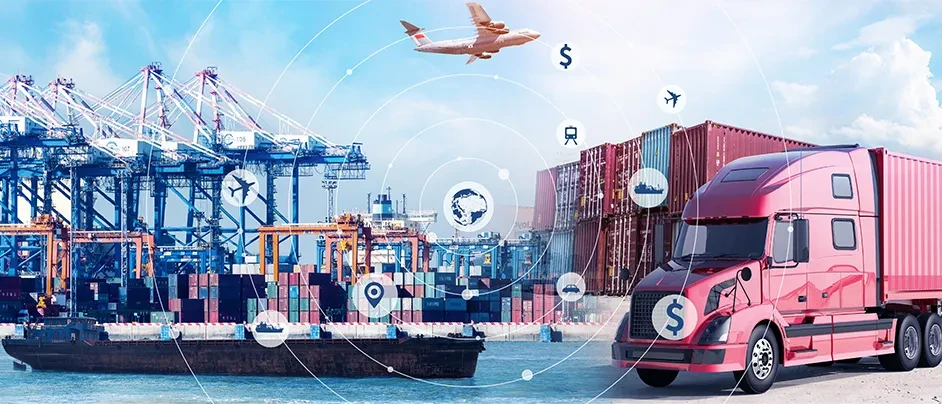
Streamlined Global Logistics
We handle shipping, customs clearance (FOB, CIF, etc.), and timely delivery efficiently.
03
Targeted Market Expansion
We identify opportunities and connect you with qualified international buyers for your products.

fAQ
1.Q: What kinds of polymers are often used in making plastic mesh?
A: Common choices are High-Density Polyethylene (HDPE), Polypropylene (PP), Polyvinyl Chloride (PVC), and Nylon. The selection of materials depends on functional needs like structural sturdiness, chemical resistance, ability to withstand UV rays, and cost-effectiveness.
2.Q: What features allow plastic mesh to stand up to weathering and environmental factors?
A: These materials show great toughness against moisture, rain, and temperature changes. HDPE and PP usually have UV stabilizers to reduce breakdown and brittleness caused by sunlight. They also resist biological decomposition, fungal growth, and corrosive agents.
3.Q: In which areas across various industries is plastic mesh most widely used?
A: Its versatility allows it to be used in many fields:
Landscaping/Horticulture: Acts as erosion prevention materials, plant braces, trunk guards, and boundary markers.
Construction Industry: Used as debris control barriers, perimeter enclosures, ground reinforcement layers, and water management units.
Industrial Areas: Serves as filtering components, separation panels, display bases, and ventilation covers.
Farming Activities: Applied as protective nets, livestock enclosures, and feed storage setups.
Commercial Uses: Utilized in packing materials, product display structures, and storage separators.
Artistic Projects: Supports craft work and creative creations.
4.Q: What elements determine the right specifications for plastic mesh?
A: Key factors include:
Opening Design: Mesh size affecting holding capacity, filtration precision, or visibility.
Filament Thickness: Thicker threads boost stiffness and weight-bearing ability.
Material Selection: Based on working conditions, performance needs, and chemical compatibility (see FAQ1).
Format Needs: Required panel or coil sizes.
Performance Requirements: Expected structural pressures and levels of environmental exposure.
5.Q: What approaches help with efficient handling and installation of plastic mesh?
A:Handling: Requires industrial-grade cutting tools-strengthened scissors, hardened cutters, power saws, or strong blades. Stiff, thin plastic mesh can sometimes be scored and broken. Proper safety gear prevents injuries from sharp edges.
Installation: Methods vary by use:
Fixing: Secured with plastic fasteners, rust-proof clamps, fencing staples (for wood), or synthetic ties.
Ground Installation: Anchor soil-stabilizing soil grids with ground pins along the edges.
Surface Attachment: Mechanically fix reinforcing mesh with specific fasteners before applying finishes.
Hot Tags: plastic pigeon protection mesh, China plastic pigeon protection mesh manufacturers, suppliers, factory, Plastic Mesh Roll, Plastic Coated Mesh, Plastic Empty Mesh, Plastic Chicken Foor Mesh, Plastic Chicken Mesh, Plastic Product Anti Insect Netting


