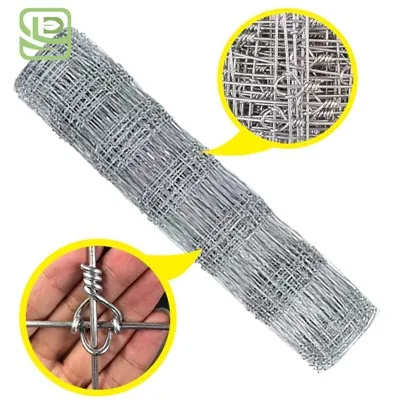
Products Description:
| Product Name | Meters Deer Fence |
| Surface Treatment | Electiric Galvanized/Hot dipped galvanized |
| Usage | Protecting, Factory, Home Security, fencing mesh |
|
Sample |
Sample are free for customers |
| Place of origin | Hebei, China |
| Material | Iron Wire/Stainless Steels |
| Color |
Silver,etc |
| Length | 10-200m |
| Application | Agricultural, Farm field |
| Height | 0.6m-2.6m |
Deer fence is a specialized, tall barrier designed primarily to exclude deer from gardens, orchards, landscapes, and agricultural areas. Typically constructed from durable, high-tensile polypropylene plastic mesh (often black for low visibility) or metal wire, it stands 7 to 8 feet high to effectively prevent deer from jumping over. The mesh size is small enough to deter entry while allowing light and air flow. Deer fencing provides a long-lasting, humane, and highly effective physical solution to protect valuable plants, crops, and property from browsing damage and trampling caused by deer, offering superior protection compared to shorter or less robust barriers.

01
Highly Effective Barrier
Physically blocks deer from accessing protected areas (gardens, crops, orchards, landscaping), providing near-total protection when installed correctly.
02
Long-Lasting Protection
Made from durable materials (polyethylene, metal), it withstands weather and provides reliable exclusion for many years with minimal maintenance.
03
Humane & Safe
Primarily deters deer through physical presence/blockage; well-designed fences minimize injury risk compared to barbed wire or sharp deterrents.
04
Cost-Effective Solution
Prevents significant damage to valuable plants, crops, and landscaping, offering a strong return on investment by protecting assets over its long lifespan.
Application of Deer Fence
Crop Protection:
Shields agricultural fields from deer feeding damage.
Prevents deer from consuming and trampling valuable crops like vegetables, fruits, berries, and grains, protecting farmers' yields and income.
Garden Preservation:
Safeguards ornamental and home gardens.
Protects flowers, shrubs, landscaping plants, and vegetable gardens in residential or public spaces from browsing, rubbing, and destruction by deer.
Sapling Defense:
Protects young trees in forestry/arboriculture.
Essential in nurseries, orchards, and reforestation projects to prevent deer from browsing on tender shoots and bark of young trees, ensuring their survival and growth.


Disease Containment:
Restricts deer movement to control spread.
Helps manage wildlife populations and limit the transmission of diseases like Chronic Wasting Disease (CWD) between deer herds or from deer to livestock by controlling their access to specific areas.
Roadway Safety:
Reduces deer-vehicle collisions.
Installed along highways and dangerous road sections to deter deer from entering traffic, significantly lowering the risk of accidents, injuries, and property damage.
Nursery & Plantation Security:
Secures commercial plant production areas.
Protects high-value plants, seedlings, and specialty crops (e.g., in botanical gardens, tree nurseries, vineyards) from deer browsing damage, ensuring plant quality and stock viability.


Our company

fAQ
1.Q: What fence height deters deer entry?
A: Installations measuring at least 7.5–8 ft (2.3–2.4 m) are advised. This elevation typically discourages leaping, as deer struggle to gauge landing security.
2.Q: Which fencing materials effectively block deer?
A: Recommended options include:
Polypropylene Netting: Budget-friendly, easy to install, and visually unobtrusive; ideal for garden settings.
Galvanized Steel Mesh (Welded/Woven): Provides superior structural integrity for permanent boundaries.
High-Tension Cable Systems: Employ closely spaced, smooth wires (potentially electrified), requiring robust post anchoring.
3.Q: How long does anti-deer fencing typically endure?
A: Material longevity differs substantially:
Polymer Netting: 5–10+ years; susceptible to UV and weathering degradation.
Galvanized Steel: Exceeds 20 years with proper installation; withstands chewing and elemental exposure.
Tensioned Cable: Delivers extended service life, especially when electrified. Non-energized systems present impact vulnerability.
4.Q: Is self-installation practical, or is professional fitting essential?
A: Basic polypropylene fences on flat ground suit DIY projects. Professional installation is strongly preferred for:
Large-scale deployments or challenging terrain (slopes, woodlands)
Steel mesh or tensioned-cable setups requiring precise implementation
Guaranteeing maximum efficacy, enhanced durability, and visual harmony
Integrating access points with equivalent exclusion capabilities
5.Q: Are specialized access solutions available, and how critical is upkeep?
A: Gates: Potential vulnerabilities. Must match fence height (preferably 8ft) and create seamless seals at ground/perimeter interfaces. Self-closing mechanisms are advantageous.
Maintenance: Vital for ongoing performance:
Conduct periodic checks to address breaches, slackening, or openings
Clear invasive plants compromising structural soundness
Verify post stability and cable tension
Routinely assess gate functionality and sealing efficiency
Hot Tags: meters deer fence, China meters deer fence manufacturers, suppliers, factory, Meters Deer Fence, Agriculture Mesh Deer Fence, Steel Deer Fence, Agricultural Deer Fence, Fixed Knot Field Fence For Deer, Deer Fixed Knot Joints Fence