Products Description :
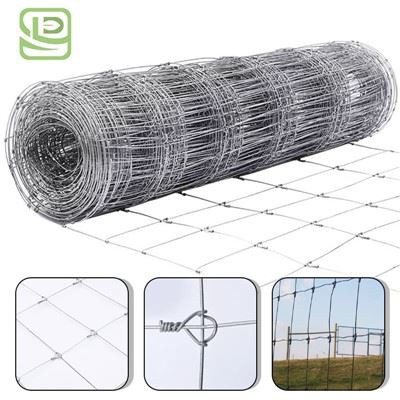
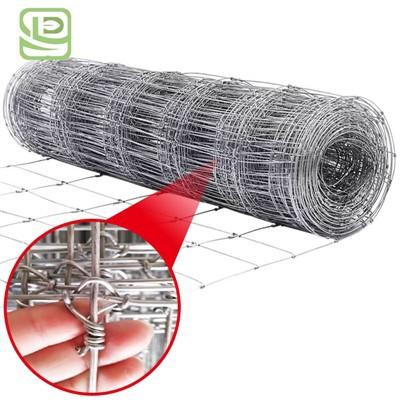
| Product Name | Fixed Knot Steel Deer Farm Fence |
| Surface Treatment | Electiric Galvanized/Hot dipped galvanized |
| Usage | Protecting, Factory, Home Security, fencing mesh |
|
Sample |
Sample are free for customers |
| Place of origin | Hebei, China |
| Material | Iron Wire/Stainless Steels |
| Color |
Silver,etc |
| Length | 10-200m |
| Application | Agricultural, Farm field |
| Height | 0.6m-2.6m |

Deer Fence
A deer fence is a specialized physical barrier designed primarily to exclude deer from entering specific areas, such as gardens, orchards, agricultural fields, nurseries, or landscaped yards. Typically constructed from durable materials like high-tensile polypropylene plastic mesh or metal wire, it is significantly taller (often 7 to 8 feet or more) than standard garden fencing, as deer are capable jumpers. The fence creates a visible and physical obstacle that prevents deer from accessing plants to feed ("browse"), rub their antlers, or cause trampling damage. It is usually supported by sturdy posts (wooden or metal) and installed vertically around the perimeter of the area needing protection. Its design aims to be long-lasting, weather-resistant, and sometimes nearly invisible (in the case of black poly mesh), while effectively safeguarding vegetation from deer predation. It may also deter other wildlife like rabbits when secured at ground level.
product applications

Crop Protection:
Shields agricultural fields, orchards, vineyards, and home gardens from deer browsing and trampling, preventing significant crop loss and damage.

Landscape Preservation:
Protects ornamental gardens, shrubs, flowers, trees (especially young saplings), and lawns in residential, commercial, or public spaces from deer feeding and antler rubbing.

Forest Regeneration:
Enables the successful growth of young trees (seedlings/saplings) in forestry operations, reforestation projects, and natural woodlands by preventing deer from browsing on new growth.

Disease Containment:
Creates barriers to restrict deer movement between areas, helping to slow the spread of contagious diseases like Chronic Wasting Disease (CWD) within wild or farmed deer populations.


fAQ
1.Q: At what fence elevation do deer intrusions become effectively deterred?
A: An optimal barrier requires minimum dimensions of 7.5–8 ft (2.3–2.4 m). This elevation typically discourages leaping as deer cannot reliably evaluate landing security.
2.Q: Which fencing substances constitute appropriate deer deterrents?
A: Primary methodologies include:
Polypropylene Mesh: Economical, installation-friendly, and low-profile; ideal for cultivated areas.
Galvanized Metal Grids (Welded/Woven): Provide exceptional structural integrity for permanent boundaries.
High-Tension Wire Systems: Employ closely spaced, smooth cables (with optional electrification), necessitating robust post anchoring.
3.Q: What durability expectancy exists for deer-exclusion barriers?
A: Material lifespan varies significantly:
Polymer Mesh: 5–10+ years; susceptible to ultraviolet degradation and weathering.
Galvanized Metal: Exceeds 20 years with proper installation; withstands chewing and elemental exposure.
Tensioned Wire: Delivers extended service life, especially when electrified. Non-energized variants present collision hazards.
4.Q: Is self-installation practicable, or is professional expertise strongly warranted?
A: Basic polypropylene systems on even ground permit DIY projects. Specialized installation proves essential for:
Large-scale deployments or complex topography (gradients, wooded zones)
Metal or tensioned-wire assemblies requiring precise implementation
Maximizing barrier efficacy, longevity, and visual harmony
Integrating access points with equivalent exclusion capability
5.Q: Do purpose-built entry solutions exist, and how critical is ongoing upkeep?
A: Gate Systems: Represent potential vulnerability points. Must match fence height (optimally 8ft) and establish uninterrupted seals at ground/perimeter interfaces. Self-latching mechanisms enhance security.
Preservation Protocols: Vital for sustained operation:
Conduct periodic examinations to address breaches, slackening, or openings
Clear invasive flora compromising structural stability
Verify post solidity and wire tension
Systematically assess gate functionality and sealing performance
Hot Tags: fixed knot steel deer farm fence, China fixed knot steel deer farm fence manufacturers, suppliers, factory, Meters Deer Fence, Steel Deer Fence, Deer Animal Protection Fence Screen, Galvanized Fixed Knot Deer Fence, Deer Fixed Knot Joints Fence, Fixed Knot Field Fence For Deer